Polycystic ovary syndrome
Compared within 1 study that had both: 50 people with polycystic ovary syndrome and 43 healthy people. 10 microbes are less common in people with polycystic ovary syndrome, and none more common.
A difference is an association: it doesn’t mean these microbes cause, prevent or treat polycystic ovary syndrome.
Phylum
Searching opens both lists and shows only matching rows.
Less common in polycystic ovary syndrome · 10
Strongest first, then the biggest gap · Each figure is 10 people Strongest first · Each figure is 10 people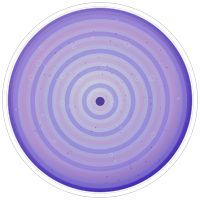 Oscillibacter sp. MSJ-31 Healthy 65% polycystic ovary syndrome 26%
 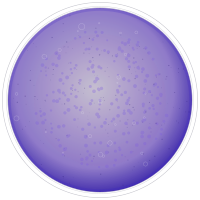 [Clostridium] leptum Healthy 88% polycystic ovary syndrome 54%
 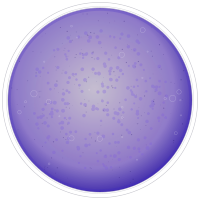 Evtepia gabavorous Healthy 79% polycystic ovary syndrome 42%
 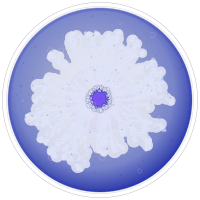 Phocaeicola plebeius Healthy 74% polycystic ovary syndrome 40%
  Anaerotruncus rubiinfantis Healthy 35% polycystic ovary syndrome 8.0%
PubMed · human studies and reviews first
All research on itRecent research
Source: PubMed, U.S. National Library of Medicine · 44 linked papers, last 10 years